
Cincinnati Grinder Ball Screw Accuracy: A Complete Guide
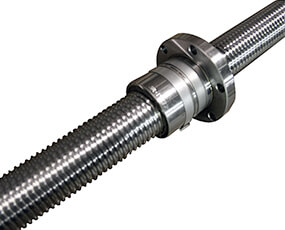
Ball screws are the backbone of precision grinding. They convert rotary motion into linear motion, enabling Cincinnati Milacron grinders to position workpieces with micron-level accuracy. By translating rotary motion into highly controlled linear movement, ball screws directly influence positioning accuracy and repeatability within the machine’s motion system. When these components degrade, the effects ripple through your entire production line, creating missed tolerances, increased scrap rates, and costly downtime.
Cincinnati grinder ball screw accuracy issues don’t happen overnight. They develop gradually through normal wear, inadequate lubrication, or thermal stress. Recognizing early warning signs and understanding when to repair versus replace could save your business thousands in emergency repairs and lost production time.
This guide explains the causes of ball screw accuracy degradation, how to spot problems early, and the factors that determine whether repair or replacement is your best option.
How Ball Screws Affect Grinding Accuracy
Ball screws directly impact every aspect of grinding precision. They enable precise axis positioning across X, Y, and Z movements, translating control inputs into exact mechanical motion. This precision determines whether your parts meet specification or end up as scrap.
Surface finish quality depends on consistent, smooth movement. Worn ball screws introduce vibration and irregular motion that show up as chatter marks or waviness on ground surfaces. Even minor degradation affects tolerance accuracy, causing dimensional variations that compound across production runs.
As backlash increases and repeatability declines, overall positioning accuracy suffers—especially in applications holding tolerances within tenths (0.0001 inches) or tighter. For precision grinding operations holding tolerances within 0.0001 inches, there’s zero margin for ball screw wear.
Common Causes of Ball Screw Accuracy Loss
Ball screw accuracy degradation is rarely the result of a single event. Instead, it typically develops over time as multiple mechanical and environmental factors compound. Understanding the root causes helps maintenance teams address problems early—before minor wear evolves into major positioning failures.
- Normal wear from high-cycle production leads to most failures. Ball screws in production grinders can execute millions of cycles annually. Each cycle creates microscopic wear on ball tracks and races, gradually increasing backlash and reducing positioning accuracy.
- Lubrication breakdown accelerates this wear exponentially. Grinding environments are particularly harsh—coolant contamination, metal fines, and thermal cycling all degrade lubricant effectiveness. When lubrication fails, metal-to-metal contact creates rapid wear and pitting. Contaminants entering the ball nut assembly can damage recirculating balls and raceways, accelerating preload loss and internal wear.
- Excessive load and misalignment create uneven wear patterns. Overloading occurs when grinding forces exceed design specifications or when machine geometry shifts due to foundation settling or improper leveling. Loads that exceed the ball screw’s rated dynamic or static capacity can cause permanent deformation of raceways and balls, shortening service life. Misalignment causes side loading, wearing one side of the ball track faster than the other.
- Thermal expansion during extended production runs affects dimensional stability. As Cincinnati grinders heat up during operation, ball screws expand. Without proper preload compensation, this expansion introduces positioning errors that vary with machine temperature.
- Aging components on legacy Cincinnati grinder models can face additional challenges. While older machines have often been built to high precision standards, parts availability, outdated lubrication systems, and long service histories can make them more vulnerable to cumulative wear issues. Part availability can also become a concern as models age.
Early Warning Signs of Accuracy Problems
Ball screw accuracy problems typically develop gradually rather than appearing all at once. Subtle changes in machine performance often surface before serious production disruptions occur. Recognizing these early warning signs allows maintenance teams to intervene proactively—preventing minor wear from escalating into costly downtime or quality failures.
- Increased backlash is the first measurable indicator. When you reverse direction on an axis, excessive slop before movement begins signals worn ball tracks. Backlash typically reflects reduced preload between the balls and raceways and increased internal clearance. This dead zone grows as wear progresses, making precise positioning impossible.
- Inconsistent part dimensions often appear before operators notice mechanical issues. Taper problems, out-of-round conditions, or dimensional variations across a batch indicate positioning repeatability has degraded. These quality issues typically cost far more than the ball screw itself.
- Unusual noise or vibration during axis movement provides audible warnings. Grinding or rumbling sounds, especially during direction changes or at specific positions in the travel range, indicate damaged ball tracks or worn balls. Vibration that wasn’t present when the machine was new signals similar problems.
- Declining surface finish quality connects directly to ball screw condition. Chatter marks, feed lines, or waviness that can’t be corrected through dressing or parameter adjustments often trace back to positioning system wear.
- Rising scrap and rework rates represent the cumulative cost of ball screw degradation. When first-pass quality drops and more parts require secondary operations or rejection, Cincinnati grinder ball screw accuracy issues are likely contributing factors.
Ball Screw Repair vs. Replacement: Making the Right Choice
Once ball screw accuracy problems are confirmed, the next question is whether repair will restore reliable performance or if full replacement is the smarter long-term solution. The right decision depends on wear severity, expected service life, production demands, and the risk tolerance of your operation.
Start by assessing wear severity. Measure backlash across the full travel range and compare it against manufacturer specifications. Inspect for visible pitting, scoring, corrosion, and uneven wear patterns. Document noise and vibration characteristics during operation. Establishing this baseline helps determine whether the damage is localized and serviceable—or widespread and structural.
Repair is often effective when wear is minor to moderate and isolated to specific sections of travel. Reconditioning may include rebuilding or replacing components within the ball nut assembly, restoring preload, and replacing worn balls and seals. When the screw shaft and raceways remain within acceptable limits, this approach can reduce costs while restoring positioning consistency.
Replacement becomes necessary when wear is extensive or recurring. Significant pitting across multiple sections, repeat accuracy failures after previous repairs, or deep scoring that exceeds acceptable limits indicate that reconditioning will not provide reliable long-term performance. Catastrophic failures—such as broken balls, cracked nuts, bent shafts, or severe corrosion—require complete replacement.
Cost analysis should extend beyond the initial invoice. While a repaired ball screw may cost less upfront, the risk of repeat failure and unplanned downtime can quickly offset short-term savings.
New ball screws typically offer predictable service life, improved reliability, and stronger warranty protection.
Production schedules often drive the final decision. If repair returns the grinder to service quickly and the wear profile supports continued reliability, it may be appropriate. However, if there is a high risk of recurring failure during peak production, replacement may better protect uptime and product quality.
Because the financial and operational stakes are significant, expert evaluation is critical. Experienced service providers can determine whether grinder replacement parts and components like ball screws are viable candidates for repair or require replacement. Their assessment should include detailed measurement data—not just visual inspection—and should account for the machine’s condition, application demands, and production goals.
How Professional Replacement Services Restore Grinder Accuracy
Replacing a ball screw is not simply a parts swap—it is a precision procedure that directly affects machine geometry, repeatability, and long-term performance. Here’s an overview of how professional replacement services ensure that accuracy is fully restored and protected:
- Precision Inspection Before Replacement: The inspection process ensures you’re solving the right problem. GCH Tool Group’s technicians measure actual versus specified backlash, document wear patterns, and verify that ball screw degradation is the root cause rather than a symptom of other issues like way wear or spindle problems.
- Matching Ball Screw Specifications to Cincinnati Grinder Models: This step prevents compatibility problems. Each grinder model requires specific lead dimensions, overall lengths, mounting configurations, and preload specifications. Using incorrect specifications creates new accuracy problems even with a new ball screw.
- Alignment and Proper Preload Settings During Installation: This is what determines long-term performance. Proper preload eliminates backlash while allowing smooth motion. Excessive preload increases friction and heat generation, while insufficient preload permits backlash and reduced stiffness. These parameters must be set according to machine geometry and application requirements.
- Protecting Machine Geometry During Replacement: To ensure existing accuracy, professional installation includes verifying ways are straight, mounting surfaces are flat, and coupling alignment is within tolerance. Rushing installation or cutting corners compromises even the highest-quality replacement components.
Why Choose GCH Tool Group for Cincinnati Grinder Replacement Parts
GCH Tool Group specializes in Cincinnati grinder ball screw replacement and other grinder replacement components. Our extensive inventory includes ball screws for legacy and modern Cincinnati models, ensuring you can restore accuracy regardless of machine age.
High-precision ball screws manufactured to OEM specifications or better provide reliable performance. We maintain strict quality control over every aspect of manufacturing, from material selection through final inspection. Our grinder parts and components meet or exceed original equipment standards.
The support we provide for legacy and modern machines sets GCH Tool Group apart. Whether you’re maintaining a Cincinnati centerless grinder from decades past or supporting newer CNC models, we have the expertise and inventory to supply correct components. Our reverse-engineered drawings enable us to manufacture parts no longer available from original sources.
Reducing downtime, scrap, and repeat failures is a goal that drives our approach. Fast delivery from our 10,000+ part inventory means shorter downtime. Proper installation support is key in fixing accuracy loss in Cincinnati grinders correctly the first time. GCH Tool Group’s warranty program provides confidence in long-term reliability.
Preventing Ball Screw Wear and Accuracy Loss
Here are some maintenance tips to prevent ball screw wear and ensure continued accuracy:
- Clean ball screws regularly to remove grinding swarf and coolant residue. Use appropriate solvents that won’t damage seals or bellows. Inspect for contamination buildup, especially in areas where bellows or wipers may be damaged.
- Lubricate according to specifications using recommended lubricant types and intervals. Grinding environments quickly contaminate lubrication, making frequent relubrication essential. Automatic lubrication systems provide consistent protection better than manual methods.
- Monitor backlash measurements during routine maintenance. Establish baseline readings when ball screws are new or freshly replaced, then track changes over time. Trending data can reveal developing problems before they cause quality issues.
- Avoid overloading through proper grinding parameters. Excessive infeed rates or inadequate dressing create higher-than-design grinding forces that accelerate ball screw wear. Maintaining sharp wheels and appropriate parameters protects mechanical components.
- Inspect periodically for signs of wear, contamination, or damage. Check bellows integrity, listen for unusual sounds, and feel for vibration. Early detection can prevent small problems from becoming expensive failures.
- Use quality replacement parts when maintenance or repair becomes necessary. Generic or substandard grinder accessories may save money initially but typically fail sooner, costing more in repeated downtime and reinstallation labor.
Restore Confidence in Your Grinding Accuracy
Cincinnati grinder ball screw accuracy issues respond well to early intervention. When you detect positioning problems, rising scrap rates, or unusual axis behavior, timely action prevents escalating damage and production losses.
In the end, the decision between repair and replacement depends on wear severity, expected service life, and production requirements. Professional evaluation provides the data needed to choose wisely. Proper installation and ongoing maintenance extend service life and maximize your investment.
Early detection through regular monitoring saves both cost and downtime. A proactive maintenance program identifies developing problems before they affect production quality. When replacement becomes necessary, choosing an experienced supplier and installer can ensure accurate restoration.
GCH Tool Group delivers reliable ball screw replacement for Cincinnati grinders with the expertise, inventory, and support services that manufacturing operations require. Our team understands the critical role ball screw accuracy plays in grinding performance and provides solutions that restore precision and productivity.
Contact GCH Tool Group today to discuss your Cincinnati grinder’s ball screw condition and explore replacement or grinding upgrades that can eliminate accuracy problems.
 Request a Quote