Magnetic vs. Cartridge vs. Paper Filtration: Which Coolant Filtration System’s Best for Your Grinder?
Contaminated coolant is a costly problem. It leads to poor surface finishes on your parts, causes premature grinding wheel wear, and results in expensive machine downtime. As precision grinding demands become more stringent, the need for an efficient coolant filtration system has never been more critical. Choosing the right one, however, can be challenging. The three main types—magnetic, cartridge, and paper—each offer distinct advantages depending on your application. This guide will break down the differences to help you select the best system for your needs. As a provider of OEM-grade grinding machine components, GCH Tool Group offers engineered solutions designed to optimize your grinding operations and deliver long-term value.
Common Coolant Problems Grinding Shops Face
Without proper grinder coolant filtration, small problems can quickly escalate into major expenses. Circulating contaminated fluid through your machine creates a domino effect of issues that harm both your equipment and your bottom line. These hidden costs include:
- Abrasive Swarf Keeps Circulating: Tiny metal particles (swarf) and abrasive grit remain in the coolant, acting like sandpaper on your machine’s critical components.
- Accelerated Machine Wear: This constant abrasion wears down ways, slides, and spindles, leading to a need for premature precision grinder maintenance and costly rebuilds.
- Inconsistent Tolerances and Part Scrap: Dirty coolant can cause surface imperfections, burn marks, and an inability to hold tight tolerances, resulting in a higher rate of scrapped parts.
- Higher Coolant Replacement Costs: Contaminants degrade the coolant, forcing you to replace it more often and increasing both fluid and disposal costs.
Why Manufacturing Shops Need Better Coolant Filtration NOW
The pressures on modern manufacturing shops make efficient coolant management essential for staying competitive. Three key factors are driving this need:
- Competitive Production Demands: Shops must maximize uptime and throughput. An effective filtration system reduces downtime for maintenance and coolant changes.
- Growing Precision Requirements: Industries like aerospace and medical demand tighter tolerances and superior surface finishes, which are impossible to achieve with contaminated coolant.
- Cost Pressure from Consumables and Maintenance: Extending the life of coolants, grinding wheels, and machine components directly reduces operational costs. Note that consumable costs and maintenance frequency can vary widely based on coolant volume, contaminant load, and production rates.
Magnetic Coolant Filtration: Best for Ferrous Grinding
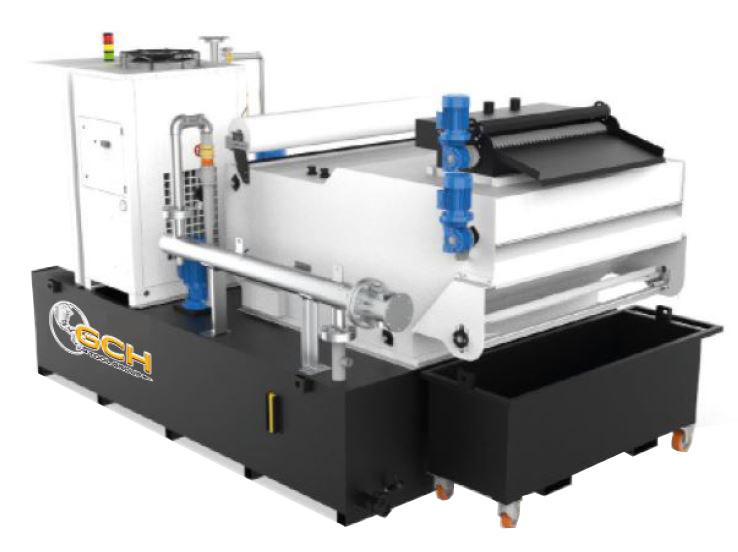
Magnetic coolant filtration is a highly effective and low-maintenance solution for shops working primarily with ferrous (iron-based) materials. These systems use powerful, permanent magnets to attract and remove metallic particles from the coolant as it flows through the unit. The collected swarf is then automatically scraped off into a disposal bin, often producing a relatively dry and compact “cake” that is easy to handle. Manufacturing shops prefer these systems because they eliminate the need for disposable filter media, which significantly lowers consumable costs and environmental impact. They are best suited for applications with high ferrous stock removal, such as surface grinding, centerless grinding, and cylindrical grinding. The main limitation is their inability to capture non-ferrous materials like aluminum or non-metallic abrasive grit.
Note: Coolant viscosity can affect magnetic performance. Whole-oil coolants above approximately 20 cSt may require engineering review to ensure proper flow and separation.
Cartridge Coolant Filtration: High-Precision Coolant Cleaning
Cartridge coolant filtration offers superior cleaning for high-precision applications. These systems pump coolant through a sealed housing containing one or more replaceable filter cartridges. The cartridges trap extremely fine particles, making them ideal for operations that demand exceptional surface finishes and tight tolerances. This method excels in ID/OD grinding, CNC grinding, and creep-feed applications. Because they can filter any material type, cartridge systems are often optimal for shops that switch between different metals. The main challenges are the recurring cost of replacement cartridges and the need for pre-filtration systems when dealing with heavy chip loads, as operating cost and cartridge life will depend on production volume and contamination levels.
Paper Filtration Systems: A Versatile Choice for High-Volume, Mixed-Material Filtration
Paper coolant filtration systems, also known as paper bed or gravity filters, provide reliable, high-capacity coolant filtration for mixed-material shops. In these systems, contaminated coolant flows onto a roll of disposable filter paper. The fluid passes through the paper, which traps the solid particles, and the clean coolant collects in a tank below. As the paper becomes clogged, a sensor automatically advances a fresh section of the roll. Shops choose paper media systems for their versatility and effectiveness in high-volume environments, particularly with surface and double-disc grinders. The primary drawback is the recurring cost of the paper media and the minor downtime required to replace the roll. Media consumption can vary significantly depending on coolant type, swarf volume, and machine load. As with magnetic units, coolant viscosity can affect flow-through efficiency on paper beds, especially with thicker whole oils.
Magnetic vs. Cartridge vs. Paper Filtration: Side-by-Side Comparison
To illustrate the differences, here is a comparison based on a Cincinnati 340-20 grinder. The best choice ultimately depends on your specific operational needs.
| Feature | Magnetic Coolant Filtration | Cartridge Coolant Filtration | Paper Filtration System |
| Collection Capacity | 39 gallons per minute (GPM) | 70 GPM) | 39 GPM) |
| Coolant Life Impact | 2x | 3x | 5x |
| Maintenance Required | Not much of note | Change filters | Change roll media |
| Filtration Efficiency | 80%; magnetic solids | 90%; 20 microns | 90%; 35 microns |
| Installation Complexity | Easy | More difficult | Easy |
| Environmental Impact | Minimal; no consumables | Medium; waste filter elements | Medium; waste media |
| Ideal Grinder Applications | All centerless | All machine tools | All centerless |
| Compatibility with Older Grinding Machines | Depends on dirty coolant height discharge | Good; install after pump | Depends on dirty coolant height discharge |
How to Choose the Right Coolant Filtration System
Selecting the ideal coolant filtration for grinding machines requires evaluating several key factors within your operation. Consider the following to make an informed decision:
- Material Being Ground: Is it ferrous, non-ferrous, or a mix? This is the primary factor determining if magnetic filtration is a viable option.
- Required Surface Finish: Higher precision and finer finishes demand filtration systems that can capture smaller micron-level particles, like cartridge filters.
- Production Volume: High-volume operations need a system that can handle a large flow rate without frequent maintenance interruptions.
- Coolant Type: Your system must be compatible with your coolant, whether it’s synthetic, semi-synthetic, or oil-based. Highly viscous oils (above ~20 cSt) may limit the performance of some magnetic or gravity systems.
- Existing Machine Layout: Consider the available floor space and how the filtration system will integrate with your current tanks and pumps.
For shops running mixed materials or switching frequently between part families, hybrid systems that combine magnetic and paper or magnetic and cartridge stages can offer the best overall results.
Why OEM-Grade Systems from GCH Tool Deliver Long-Term Payback
Investing in a quality filtration system pays dividends for years. Unlike generic alternatives, GCH’s OEM-grade systems are built with precision engineering to match all major grinder types. Our durable components are designed to last, minimizing downtime and maintenance expenses. We also specialize in custom-engineered filtration retrofits for legacy or discontinued machines. This retrofit advantage allows you to upgrade your grinder’s efficiency without the capital expense of purchasing a new machine. Supported by experienced technical specialists, GCH’s systems integrate seamlessly with your existing pumps, tanks, and conveyors, ensuring a smooth transition to cleaner, more productive grinding.
Grinding Upgrades for Better Performance
Each filtration type—magnetic, cartridge, and paper—has unique strengths. Magnetic systems offer a low-maintenance solution for ferrous materials, cartridges provide superior precision for mixed metals, and paper filters deliver high-volume versatility. The right choice depends on your materials, production volume, and precision requirements. By partnering with GCH Tool Group, your one-stop shop for precision grinder rebuild parts, to upgrade your coolant filtration, you are investing in a reliable, long-term solution built to OEM standards. An effective coolant filtration system can be one of the smartest upgrades you make to boost grinder accuracy, extend machine life, and improve your bottom line.
 Request a Quote