
How Mismatched Grinder Parts Hurt Accuracy, Finish, and Output
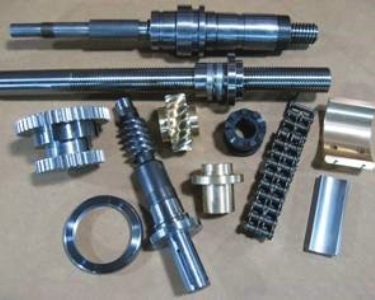
Grinding operations leave little room for error. When a machine is producing components to tight tolerances, even small deviations in spindle behavior or component fit can send parts out of specification and disrupt an entire production run. That’s why the condition and compatibility of every component inside a grinding machine matters; not just the obvious wear items, but the full system of bearings, shafts, housings, and drive mechanisms working together within precise tolerances.
One issue that often goes unaddressed until problems become visible is mismatched grinder parts. Mixing worn components with new ones, combining OEM and non-OEM replacements, or reusing aging parts during a spindle rebuild can quietly degrade machine performance. The effects compound over time, and by the time they show up on the shop floor, the damage to productivity and part quality is already done.
What Are Mismatched Grinder Parts?
Mismatched grinder replacement parts occur when components that weren’t designed or specified to work together are installed in the same assembly. This takes several forms in practice: e.g., pairing new spindle bearings with a worn housing, installing a non-OEM shaft alongside original drive components, combining grinder spindle components from different manufacturers, or simply reusing aging parts during a rebuild because they appear serviceable.
Each of these scenarios introduces variation into a system that depends on precise dimensional consistency. Even components that fit physically may not meet the tolerance requirements needed to maintain machine accuracy under load.
Why Mismatches Happen
Understanding the risks of mixing old and new grinder parts starts with understanding why facilities do it in the first place. Budget pressure is a common driver—sourcing a complete matched set of components costs more upfront than reusing what’s already on hand. Parts availability is another factor, particularly for older or discontinued grinding machine parts where sourcing exact replacements takes time.
Emergency grinder parts situations create similar pressure. When a machine goes down unexpectedly and production is on hold, the priority shifts to getting equipment back online quickly. A technical evaluation of component compatibility often takes a back seat to speed. The result is a machine that runs again, but not necessarily with the precision it was designed to deliver.
How Do Mismatched Grinder Parts Affect Machine Accuracy?
Dimensional accuracy is among the first casualties of component mismatches. Spindle runout issues are a direct consequence: when bearings, shafts, and housings don’t share the same tolerance class or are worn unevenly, the spindle can’t rotate on a true axis. That deviation transfers directly to the workpiece.
Loss of dimensional tolerances follows from there. A machine that was previously holding a feature to within a few microns may begin producing parts that drift outside specification—not dramatically, but enough to trigger inspection failures. Poor repeatability between production runs becomes apparent when setups that previously produced consistent output begin yielding variable results. Misalignment between spindle components and the machine structure compounds these effects, making even manual corrections unreliable.
Warning Signs Your Grinder May Have Mismatched Components
The effects of component mismatch don’t always appear immediately. More often, they surface gradually through observable symptoms that can be easy to misattribute to tooling wear or programming issues. The following signs warrant a closer look at component compatibility:
- Parts falling outside dimensional specifications on a recurring basis
- Increased inspection failures with no clear process change
- Frequent machine adjustments needed to maintain output quality
- Visible chatter marks on finished workpiece surfaces
- Rough or inconsistent surface textures
- Burn marks on workpieces, indicating thermal irregularities during grinding
- Inconsistent surface finish across a production run
Any one of these issues can have multiple root causes, but a pattern of several occurring together—especially after a repair or parts replacement—points strongly to a component matching problem.
How Proper Component Matching Directly Affects Surface Finish
The link between component compatibility and surface finish quality is mechanical. When spindle bearings for grinders are mismatched with the shaft or housing, the resulting instability creates vibration during the grinding cycle. That vibration affects how the grinding wheel engages the workpiece, leading to inconsistent surface quality.
Inconsistent grinding wheel performance follows from uneven spindle behavior. If the spindle doesn’t rotate with uniform stability, material removal rates vary across the workpiece, leaving an uneven finish. Uneven grinding pressure compounds the issue—components that don’t fit together correctly can’t distribute cutting forces uniformly, which affects surface uniformity. Thermal instability is another consequence: mismatched components generate friction that produces heat unevenly, and that thermal variation affects both the workpiece surface and the machine’s ability to hold position.
How Mismatched Grinder Parts Reduce Productivity
The productivity impact of mismatched components extends well beyond individual part quality. Increased machine downtime is one of the most direct effects—a grinder running on poorly matched components is more prone to unexpected failures, and each failure pulls the machine out of production. More frequent maintenance and repairs follow naturally, as components that are working against each other wear faster than they should.
Higher scrap and rework rates increase material and labor costs. Longer setup and adjustment times eat into available production hours as operators compensate for a machine that can’t hold its settings. Over time, reduced spindle life and declining overall equipment efficiency erode the return on what is typically a significant capital investment. Learn more about protecting that investment in GCH Tool Group’s guide to extending the lifespan of your grinder parts.
CNC Spindle Rebuilds: Why Component Matching Matters
Grinder spindle repair and rebuilding is a precision engineering process, not simply a parts replacement exercise. The spindle functions as a system; bearings, shaft, housing, lubrication system, and drive mechanism all interact under load, and the performance of each depends on the others meeting their specified tolerances.
Critical Parts That Must Work Together
A successful spindle rebuild requires careful attention to the compatibility of every major component:
- Bearings must be selected to match the shaft diameter, housing bore, and speed requirements of the specific spindle application.
- Spindle shafts must be within specification for roundness and straightness before installation.
- Housings must be measured and confirmed to accept the bearing set within the required fit class.
- Lubrication systems must be matched to bearing type and operating speed.
- Drive mechanisms must be aligned and balanced to avoid introducing vibration at the source.
The Importance of OEM-Grade Grinder Replacement Parts
OEM-grade grinder replacement parts meet the dimensional and material specifications the original machine was designed around. Maintaining those tolerances helps preserve spindle alignment, bearing preload, and overall operating stability throughout the assembly.
The benefits of OEM-grade replacement parts include consistent fit and function across the assembly, reliable performance under production loads, extended equipment life, and a reduced risk of repeat failures that force another rebuild sooner than expected.
Explore GCH Tool Group’s full range of OEM-grade grinder replacement parts and components, including aftermarket options engineered to meet or exceed original specifications
Why Choose GCH Tool Group for Spindle Rebuilding & OEM-Grade Replacement Parts?
Founded in 1962, GCH Tool Group has been serving the grinder industry for over six decades. The company operates a 300,000-square-foot manufacturing facility and warehouse in Warren, Michigan, housing the world’s largest inventory of new grinder parts and components—more than 10,000 items built to OEM specifications or better, including over 350 standard off-the-shelf component assemblies.
GCH Tool Group’s engineering team brings hands-on expertise across centerless, ID, OD, double disc, and surface grinding applications. Parts are manufactured under strict quality control and supported by an in-house metrology laboratory equipped with Zeiss testing equipment. An exclusive eight-hour run-off test ensures replacement components are ready for immediate production use—no break-in period required.
For facilities facing urgent part needs, GCH Tool Group’s emergency grinder parts delivery service provides rapid access to critical components with same-day shipping available on most items. The company supports customers in more than 60 countries and offers grinder spare parts for all major grinder types and brands, from Cincinnati Milacron and Blanchard to Bryant, Landis, and Heald.
Restore Precision Before It Costs You More
Component mismatches in grinding machines carry risks that aren’t always obvious at first. A repair made in a hurry or a rebuild completed with whatever parts were available can quietly degrade accuracy, surface finish quality, and machine uptime over weeks and months. By the time the effects are clearly visible, the costs in scrap, rework, and unplanned downtime have already accumulated.
Selecting matched, OEM-grade components—and working with a supplier equipped to evaluate and support those decisions—is how precision grinding operations maintain consistent machining accuracy. GCH Tool Group has the inventory, engineering expertise, and spindle rebuilding services to support that standard. Explore GCH Tool Group’s grinder replacement parts and spindle rebuild solutions and restore the performance your grinding operation depends on.
 Request a Quote