Choosing the Right High-Frequency Spindle for Your Application: A Buyer’s Decision Guide
A powerful spindle isn’t always the right spindle. In the high-stakes world of precision manufacturing, a mismatch between your spindle and your application can lead to premature bearing failure, poor surface finishes, and wasted energy. As industries increasingly demand higher speeds and tighter tolerances, selecting the optimal high-frequency spindle is more critical than ever.
This guide walks you through the essential steps to ensure your next investment drives productivity, not downtime—and serves as a practical checklist for buying high-frequency spindle solutions that truly fit your operation.
What Is a High-Frequency Spindle?
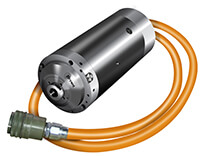
A high-frequency spindle is an electric spindle driven by a high-frequency inverter, allowing it to achieve rotational speeds far exceeding those of conventional spindles. While a standard spindle might top out at a few thousand RPM, high-frequency models can reach speeds of 100,000 RPM or more.
Compared to traditional belt-driven designs, a modern precision spindle offers a compact form factor relative to power output, precise control over speed and torque, and superior balance. These advantages make high-frequency spindles indispensable as a spindle for grinders and other applications requiring exceptional surface finish and dimensional accuracy.
Step 1: Understand Your Application Requirements
Selecting the right spindle starts with the machining process—not just the RPM on the spec sheet. Choosing the wrong configuration can limit performance, reduce spindle life, and compromise part quality.
Your Machining Process
Different operations demand unique spindle characteristics:
- Internal vs. External Grinding: Internal grinding typically requires higher RPMs and compact spindle designs to fit inside the workpiece, along with superior balance. External grinding, conversely, often prioritizes rigidity and torque to handle larger wheels and material removal rates.
- CNC Machining, Milling, and Micro-Machining: Heavy milling requires high torque at lower speeds, while micro-machining and finishing operations demand ultra-high speeds and extremely low runout to prevent tool breakage.
- Continuous vs. Intermittent Operations: Duty cycle matters. Continuous production environments require robust cooling and thermal stability, while intermittent operations allow more flexibility when selecting grinding components.
The Material Being Machined
Material properties directly affect spindle performance and longevity. Hard, brittle materials such as ceramics or hardened steel require high speed and minimal vibration to prevent micro-fractures. Softer materials like aluminum demand higher material removal rates and sufficient torque. A mismatch here leads to chatter, excessive tool wear, and poor finishes—often accelerating the need for grinder replacement parts.
Step 2: Key Technical Factors to Consider Before Buying
Once application requirements are defined, evaluate the technical specifications carefully. This step is critical when planning grinding upgrades or replacing aging components.
RPM, Power & Torque Balance
Higher RPM alone is not a solution. The spindle’s power curve must match the cutting load. A spindle that runs fast but lacks torque at operating speed will overheat or stall, reducing efficiency and shortening service life.
Bearing Type & Precision Class
The heart of any high-frequency spindle is its bearing system. Angular contact bearings are commonly used to manage combined axial and radial loads. For ultra-high-speed applications, hybrid ceramic bearings offer lower mass, reduced thermal expansion, and superior vibration control—key factors in maintaining precision.
Lubrication & Cooling Methods
- Lubrication: Grease-for-life systems are low maintenance but have speed limitations. Oil-air mist lubrication is essential for ultra-high-speed applications, though it does require more monitoring.
- Cooling: Effective cooling is non-negotiable. Liquid-cooled spindles generally provide better thermal stability than air-cooled options, especially for continuous-duty grinding operations.
Step 3: Accuracy, Balancing & Surface Finish Requirements
At high rotational speeds, even microscopic imbalances generate destructive forces. Dynamic balancing minimizes vibration and protects bearings. Spindle runout—the degree of tool deviation from center—directly impacts surface finish and part geometry. For precision grinding, tolerances are often measured in microns, making spindle accuracy a critical quality driver when choosing the right grinding components.
Step 4: Compatibility with Existing Machines
Before purchasing, confirm that the spindle integrates seamlessly with your current equipment. Keep the following in mind:
- Machine Interface and Mounting: Verify flange styles, mounting dimensions, and mechanical interfaces.
- Electrical Compatibility: High-frequency spindles require compatible inverters and electrical systems capable of delivering the correct voltage and frequency.
- Retrofitting Older Machines: Installing a high-frequency spindle for older machines is a cost-effective way to improve accuracy and productivity, but it requires expert evaluation to ensure mechanical and electrical compatibility.
Step 5: Standard vs. Custom High-Frequency Spindles
Off-the-shelf solutions often work well for standard applications and common grinder accessories. However, unique constraints related to space, speed, mounting, or duty cycle may require a custom high-frequency spindle.
Custom designs are engineered to match specific operating conditions, often delivering longer service life, higher performance, and better ROI despite a higher initial investment. When combined with properly selected grinder parts and components, customization can significantly reduce downtime.
Why Work with GCH Tool Group for a High-Frequency Spindle
Choosing the right partner is just as important as choosing the right hardware. GCH Tool Group specializes in application-driven solutions that go beyond basic grinder accessories and components:
- Application-Driven Spindle Selection: Specifications are matched to your exact process requirements.
- High-Precision Engineering: Our standards ensure superior accuracy, balance, and long-term reliability.
- Customization & Retrofit Expertise: We can engineer custom solutions or retrofit older machines to modern standards.
- Trusted Partner for Grinder Spindle Solutions: A global leader in grinder parts and components.
- Reduced Downtime & Longer Spindle Life: Optimized designs that protect your investment.
Maximize ROI with the Right Selection
Selecting the correct high-frequency spindle based on application, material, and technical requirements is the most reliable way to improve accuracy, machine reliability, and overall ROI. The right spindle minimizes vibration, extends component life, and supports consistent, high-quality output.
Upgrade your machine performance with a GCH Tool Group high-frequency spindle. Contact our team today to discuss your application requirements and explore solutions designed for precision, durability, and long-term success.
 Request a Quote